

In today’s hyper-connected world, digital content flows faster than ever, powering everything from live sports to virtual meetings. Behind this seamless experience lies a powerful yet often overlooked framework known as MMSBre. As streaming demands surge and businesses digitize operations, understanding this system becomes increasingly important. Whether you are a developer, business owner, or tech enthusiast, gaining insight into this evolving architecture can help you stay ahead in a competitive digital landscape.
What Is MMSBre?
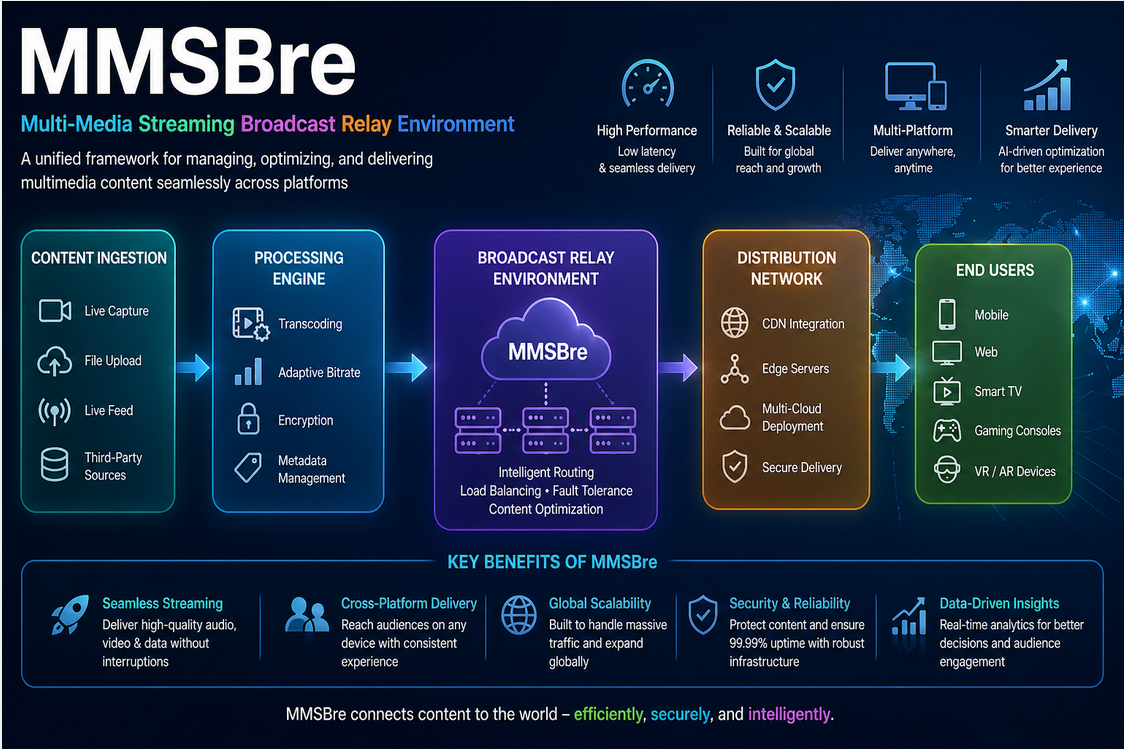
MMSBre, commonly defined as Multi-Media Streaming Broadcast Relay Environment, is a sophisticated framework designed to manage and optimize multimedia streaming and digital content delivery. It integrates multiple technologies into a unified ecosystem, ensuring efficient transmission of audio, video, and data across various platforms.
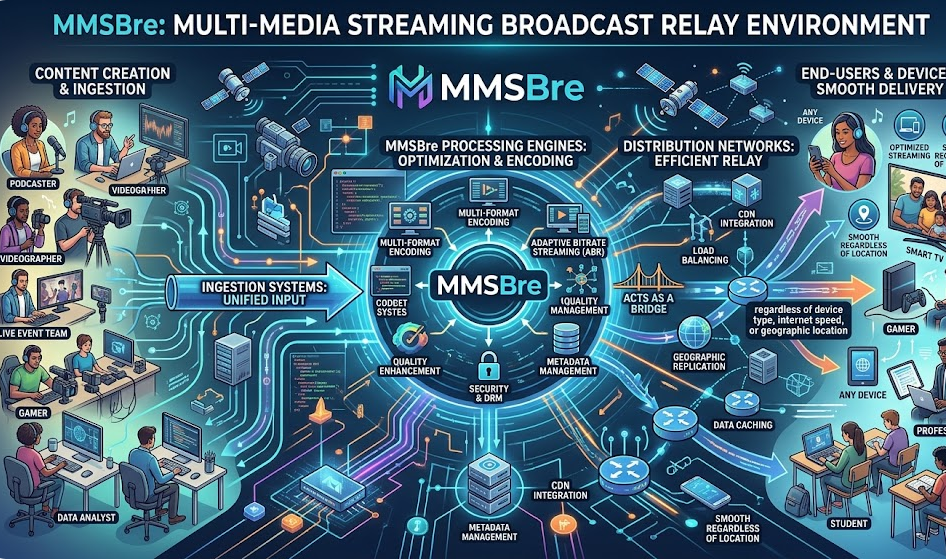
At its core, this framework acts as a bridge between content creators and end-users. Instead of relying on isolated tools, it combines ingestion systems, processing engines, and distribution networks into a cohesive structure. This ensures that content is delivered smoothly regardless of device type, internet speed, or geographic location.
Interestingly, in business contexts, the same concept is sometimes interpreted as a Multi-Modal Smart Business Resource Ecosystem. In this sense, it extends beyond media streaming and focuses on integrating enterprise tools, workflows, and communication systems into a single digital environment.
The Evolution of Digital Streaming Frameworks
The rise of MMSBre is closely tied to the exponential growth of digital media consumption. Over the past decade, streaming platforms have transitioned from simple video hosting services to complex global infrastructures capable of serving millions of users simultaneously.
Traditional systems often struggled with buffering, latency, and scalability. As user expectations increased, the need for a more advanced framework became evident. This led to the development of modular architectures that could dynamically adapt to changing demands.
Modern frameworks like this one leverage cloud computing, edge servers, and intelligent routing to deliver high-quality content in real time. The evolution reflects a shift from static systems to adaptive ecosystems that prioritize performance, reliability, and user experience.
Core Components of MMSBre Architecture
One of the defining features of MMSBre is its modular structure. Each component is designed to handle a specific stage of the media lifecycle, ensuring efficiency and scalability.
Ingestion Layer
The ingestion layer is responsible for collecting raw media data from various sources such as cameras, servers, or user uploads. This data is then prepared for processing, ensuring compatibility with downstream systems.
This stage is crucial because it sets the foundation for the entire streaming process. Poor ingestion quality can lead to delays and degraded output, making optimization at this level essential.
Processing Engine
The processing engine handles real-time transcoding and optimization. It converts media into different formats and resolutions to ensure compatibility with a wide range of devices.
For example, a single video stream may be transformed into multiple versions to suit smartphones, tablets, and desktops. This adaptability enhances user experience by minimizing buffering and ensuring smooth playback.
Distribution Network
The distribution network ensures that content reaches users quickly and efficiently. By utilizing advanced routing protocols, it identifies the fastest path for data transmission.
This component often relies on Content Delivery Networks (CDNs), which store cached versions of content in multiple locations worldwide. This reduces latency and improves accessibility.
Relay Infrastructure
The relay infrastructure serves as the backbone of the entire system. It maintains stable connections even during high traffic conditions, ensuring uninterrupted streaming.
This distributed architecture eliminates single points of failure, making the system more resilient and reliable under heavy loads.
How MMSBre Works in Real-Time Streaming
When a user streams a live event, MMSBre operates seamlessly behind the scenes. The system first captures the raw media through the ingestion layer, then processes it into multiple formats using the processing engine.
Next, the distribution network determines the optimal delivery route based on the user’s location and network conditions. Finally, the relay infrastructure ensures that the stream reaches the user without interruption.
This coordinated workflow allows for:
- Real-time content delivery with minimal delay
- Automatic quality adjustment based on bandwidth
- Continuous playback without buffering
- Efficient handling of large-scale audiences
The result is a smooth and immersive viewing experience that meets modern expectations.
Business Applications of MMSBre
Beyond media streaming, MMSBre has found a significant role in enterprise environments. As a Multi-Modal Smart Business Resource Ecosystem, it helps organizations integrate various digital tools into a unified system.
Modern businesses often rely on multiple platforms for communication, project management, and data analytics. This fragmentation can lead to inefficiencies and miscommunication. By adopting this framework, companies can streamline their operations and improve collaboration.
For instance, teams can access real-time updates, share data seamlessly, and automate workflows within a single ecosystem. This reduces dependency on disconnected tools and enhances overall productivity.
Key Benefits of Implementing MMSBre
Adopting this framework offers numerous advantages for both streaming platforms and enterprises. Its design focuses on performance, scalability, and efficiency.
Some of the most notable benefits include:
- Enhanced Scalability: Easily accommodates growing user bases and increased data traffic
- Improved Performance: Reduces latency through optimized routing and processing
- High Reliability: Eliminates single points of failure with distributed architecture
- Data-Driven Insights: Generates actionable analytics for better decision-making
- Cost Efficiency: Optimizes resource usage, reducing infrastructure expenses
These benefits make it an attractive solution for organizations looking to modernize their digital infrastructure.
The Role of Data and Analytics
One of the most powerful aspects of MMSBre is its ability to generate detailed performance data. Every stage of the process—from ingestion to delivery—produces valuable insights.
Businesses can analyze this data to:
- Identify user behavior patterns
- Optimize content delivery strategies
- Predict future demand and capacity needs
- Detect and resolve potential issues proactively
This data-driven approach allows organizations to move from reactive problem-solving to proactive optimization, resulting in better user experiences and increased operational efficiency.
Security in MMSBre Systems
As digital ecosystems become more complex, security has become a top priority. Modern implementations of MMSBre incorporate advanced measures to protect data throughout the transmission process.
These include:
- End-to-end encryption for secure data transfer
- Authentication protocols to prevent unauthorized access
- Real-time monitoring for threat detection
- Secure relay nodes to safeguard distributed systems
By integrating these features, the framework ensures that sensitive information remains protected even in decentralized environments.
Future Trends and Innovations
The future of MMSBre is closely tied to emerging technologies such as Artificial Intelligence (AI) and Machine Learning (ML). These innovations are set to transform how digital frameworks operate.
AI-driven systems can analyze traffic patterns and automatically optimize routing paths. Machine learning algorithms can predict user preferences, enabling personalized content delivery.
Other anticipated advancements include:
- Smarter edge computing for faster data processing
- Automated scaling based on real-time demand
- Enhanced security protocols to counter evolving threats
- Greater integration with Internet of Things (IoT) devices
By 2026 and beyond, these developments are expected to make the framework even more efficient, adaptive, and intelligent.
Challenges and Considerations
Despite its advantages, implementing MMSBre is not without challenges. Organizations must carefully plan their infrastructure and ensure compatibility with existing systems.
Common challenges include:
- High initial setup costs
- Complexity in system integration
- Need for skilled technical expertise
- Ongoing maintenance and optimization
Addressing these challenges requires a strategic approach, including proper planning, training, and continuous monitoring.
Why MMSBre Is Essential in Today’s Digital World
The importance of MMSBre cannot be overstated in a world driven by digital experiences. From streaming platforms to enterprise systems, the need for efficient and scalable frameworks continues to grow.
By unifying multiple technologies into a single ecosystem, it enables seamless communication, efficient data processing, and reliable content delivery. This makes it a cornerstone of modern digital infrastructure.
Organizations that embrace this framework are better positioned to innovate, adapt, and compete in an increasingly dynamic environment.
Conclusion
MMSBre represents a significant leap forward in how digital systems are designed and operated. Whether viewed as a streaming architecture or a business resource ecosystem, its impact is undeniable. By combining scalability, efficiency, and intelligence, it addresses many of the challenges faced by modern digital platforms.
As technology continues to evolve, this framework will play an even more critical role in shaping the future of content delivery and business operations. Understanding and leveraging its capabilities can provide a strong competitive advantage in today’s fast-paced digital landscape.
Frequently Asked Questions
1. What does MMSBre stand for?
MMSBre typically stands for Multi-Media Streaming Broadcast Relay Environment. In business contexts, it can also mean Multi-Modal Smart Business Resource Ecosystem.
2. How does MMSBre improve streaming quality?
It enhances streaming by optimizing data routing, reducing latency, and dynamically adjusting media quality based on user bandwidth and device capabilities.
3. Is MMSBre suitable for small businesses?
Yes, small businesses can use it to integrate tools, streamline workflows, and improve communication, making operations more efficient.
4. Does MMSBre enhance data security?
Modern implementations include encryption, authentication protocols, and monitoring systems that significantly improve data security.
5. How does MMSBre handle high traffic?
It uses a distributed architecture that spreads traffic across multiple nodes, ensuring stability and consistent performance during peak usage.
6. Can MMSBre be used outside streaming?
Absolutely. It is widely used in business environments to unify digital tools and improve workflow efficiency.
7. What is the future of MMSBre?
The framework is expected to evolve with AI, machine learning, and edge computing, making it more intelligent, adaptive, and efficient.
Get more updates or Stories on The AI Pedia
