

The term serlig is intriguing, uncommon, and layered with meaning depending on context. While not widely recognized in mainstream global vocabulary, it carries linguistic, cultural, and conceptual value in specific regions and interpretations. Whether encountered as a surname, a regional expression, or a conceptual idea tied to identity and heritage, serlig invites deeper exploration. This article examines its origins, possible meanings, cultural relevance, and how it continues to appear in modern contexts, offering a complete and engaging understanding of the term.
The Linguistic Roots of Serlig
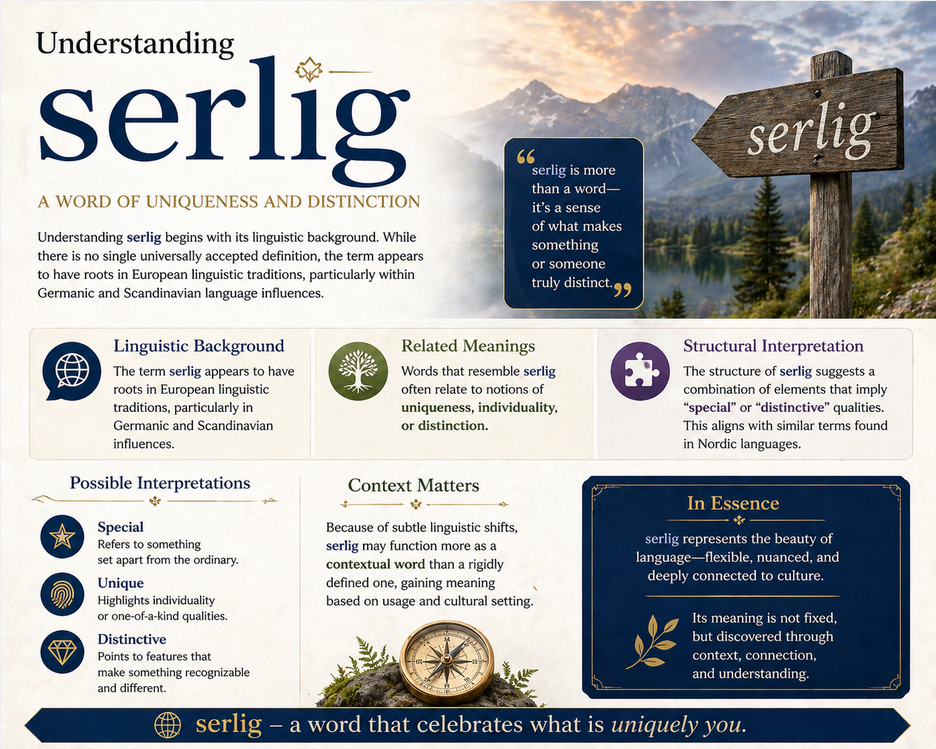
Understanding serlig begins with its linguistic background. While there is no single universally accepted definition, the term appears to have roots in European linguistic traditions, particularly within Germanic and Scandinavian language influences. Words that resemble serlig often relate to notions of uniqueness, individuality, or distinction.
In some interpretations, the structure of the word suggests a combination of elements that imply “special” or “distinctive” qualities. Linguistically, this aligns with similar terms found in Nordic languages, where subtle shifts in spelling can significantly alter meaning. Because of this, serlig may function more as a contextual word than a rigidly defined one, gaining meaning based on usage and cultural setting.

Cultural Interpretations and Symbolism
Beyond its linguistic roots, serlig carries symbolic weight. In many cases, it is associated with ideas of identity, belonging, and uniqueness. When used as a name or descriptor, it often reflects something rare or personal, highlighting individuality in a meaningful way.
In cultural storytelling, words like serlig are often used to describe characters or traits that stand apart from the ordinary. This could include a person with exceptional qualities, a place with unique characteristics, or even a moment that feels significant beyond the everyday. As a result, the term can evoke a sense of mystery and distinction, making it appealing in creative and literary contexts.
Serlig as a Name or Identity Marker
One of the most common modern uses of serlig is as a surname or personal identifier. Though relatively rare, it appears in various global records, often tied to families with European ancestry. As a surname, it may have evolved over generations, adapting to different languages and spelling conventions.
Names like serlig often carry historical significance, linking individuals to their ancestral roots. In this sense, the name becomes more than just a label—it becomes a representation of heritage, migration, and lineage. People who bear this name may find value in tracing its origins, uncovering connections to specific regions or historical narratives.
Variations and Similar Terms
The flexibility of serlig is reflected in its variations. Similar words or spellings may appear across languages, each carrying slightly different meanings. These variations can include subtle differences in pronunciation or structure, yet they often share a common theme of distinctiveness or uniqueness.
In some languages, related terms might be used to describe something rare, special, or uncommon. This overlap suggests that serlig belongs to a broader family of words centered around individuality. Understanding these variations helps expand the meaning of the term, placing it within a wider linguistic and cultural framework.
Modern Usage in Digital and Creative Spaces
In today’s digital world, unique words like serlig are gaining popularity as usernames, brand names, and creative identifiers. Because the term is uncommon, it offers a sense of originality that is highly valued online. Whether used in social media, gaming, or entrepreneurship, it allows individuals and businesses to stand out.
Creative professionals often gravitate toward distinctive terms when naming projects or brands. In this context, serlig can convey a sense of innovation and individuality, making it an attractive choice for those seeking a memorable identity. Its rarity also reduces the likelihood of duplication, enhancing its appeal in competitive digital environments.
The Appeal of Unique Words Like Serlig
There is a growing appreciation for words that feel rare and meaningful, and serlig fits perfectly into this trend. In a world saturated with common phrases and repetitive language, unique terms offer a refreshing alternative. They invite curiosity, encourage exploration, and create a sense of personal connection.
People are increasingly drawn to names and words that reflect their individual identity or personal story. Using a term like serlig can be a way of expressing something deeper—whether it’s creativity, heritage, or a desire to stand out. This emotional resonance is part of what gives the term its lasting appeal.
Serlig in Branding and Marketing
From a marketing perspective, serlig holds strong potential as a brand name or concept. Its uniqueness makes it highly memorable, while its subtle associations with individuality and distinction add depth. Brands built around such names often benefit from a strong identity that resonates with audiences.
When used effectively, a name like serlig can convey values such as authenticity, creativity, and originality. These qualities are increasingly important in modern branding, where consumers seek meaningful connections with products and services. As a result, the term can serve as a powerful foundation for building a recognizable and impactful brand.
Challenges in Defining Serlig
Despite its appeal, serlig also presents certain challenges. Because it lacks a widely accepted definition, it can be difficult to interpret without context. This ambiguity can be both a strength and a limitation, depending on how the term is used.
On one hand, the open-ended nature of serlig allows for creative interpretation. On the other hand, it may require additional explanation to ensure clarity, especially in formal or professional settings. Understanding this balance is key to using the term effectively, particularly in communication and branding.
The Future of Serlig in Language and Culture
As language continues to evolve, words like serlig are likely to gain new meanings and applications. The increasing emphasis on individuality and personal expression suggests that unique terms will remain relevant in both cultural and digital spaces.
In the future, serlig may become more widely recognized, especially if it is adopted in popular media, branding, or creative works. Its adaptability makes it well-suited to evolving trends, allowing it to remain meaningful across different contexts. This potential for growth ensures that the term will continue to capture interest and inspire curiosity.
Conclusion
The term serlig represents more than just a word—it embodies ideas of uniqueness, identity, and creative expression. From its linguistic roots to its modern applications, it offers a rich and flexible meaning that adapts to different contexts. Whether used as a name, a concept, or a brand, it carries a sense of distinction that resonates with today’s emphasis on individuality.
As interest in unique and meaningful language continues to grow, serlig stands out as a compelling example of how words can evolve and inspire. Its rarity, combined with its symbolic depth, ensures that it will remain relevant in both personal and professional spheres.
FAQs
1. What does serlig mean?
The meaning of serlig varies depending on context, but it is generally associated with uniqueness, individuality, or something distinctive.
2. Is serlig a common word?
No, serlig is relatively rare and not widely used in everyday language, which adds to its appeal.
3. Can serlig be used as a name?
Yes, it is sometimes used as a surname or personal identifier, often linked to European linguistic origins.
4. Why is serlig popular in branding?
Its uniqueness and memorable quality make it ideal for branding, especially for businesses seeking a distinctive identity.
5. Does serlig have a specific origin?
It likely has roots in Germanic or Scandinavian language traditions, though its exact origin is not firmly established.
6. How can serlig be used creatively?
It can be used in writing, branding, usernames, or artistic projects to convey originality and individuality.
7. Will serlig become more popular in the future?
As interest in unique words grows, serlig has the potential to gain wider recognition and usage.
Get more updates or Stories on The AI Pedia
