

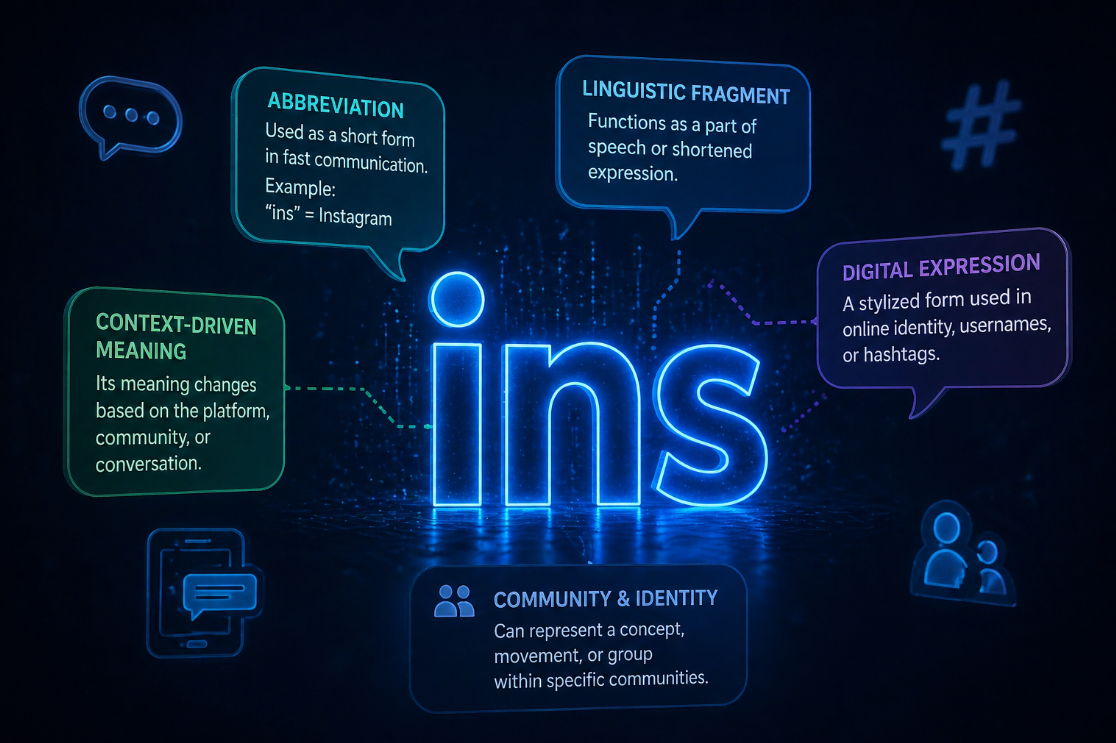
Language is full of short, intriguing terms that carry multiple meanings depending on context, and i̇ns is one such example. At first glance, it may appear simple or even ambiguous, yet it holds significance across linguistic, cultural, and digital domains. Whether encountered in abbreviations, academic discussions, or informal communication, this keyword reflects the dynamic nature of modern language. Understanding its possible interpretations helps uncover how communication continues to evolve in both traditional and digital environments.
What Is İns?
The term i̇ns does not have a single fixed definition, which makes it particularly interesting. It can function as an abbreviation, linguistic fragment, or stylized digital expression depending on its usage. In some contexts, it may relate to shortened forms of words, while in others, it may represent a concept or identity within specific communities.
Because of its brevity, it is often used in environments where quick communication is essential, such as social media, messaging platforms, or technical discussions. Its meaning is therefore shaped largely by context rather than strict dictionary definitions.

Linguistic Roots and Interpretations
From a linguistic perspective, i̇ns may be linked to various word forms across languages. In Turkish, for example, similar roots appear in words related to “insan” (human) or “inşa” (construction), although the abbreviation itself is not formally standardized.
In other contexts, it may function as a fragment or shorthand derived from longer words. This reflects a broader trend in language where users shorten terms for convenience without losing essential meaning.
Such adaptations demonstrate how language evolves organically, influenced by cultural exchange, technology, and user behavior.
İns in Digital Communication
In the digital age, short-form expressions like i̇ns are becoming increasingly common. Social media platforms, messaging apps, and online forums encourage brevity, leading to the widespread use of abbreviations and acronyms.
Key reasons for this trend include:
- Faster communication in real-time conversations
- Character limits on platforms
- Preference for concise and impactful wording
- Creative expression through unique abbreviations
As a result, terms like this gain popularity even without formal recognition, becoming part of everyday digital language.
Possible Meanings of İns Across Contexts
The flexibility of i̇ns allows it to carry different meanings depending on where and how it is used. Understanding these variations is essential for accurate interpretation.
Abbreviation Usage
In some cases, the term may serve as a shortened form of longer words or phrases. For example, it might represent:
- A technical or organizational abbreviation
- A shorthand for commonly used words
- A simplified version of complex terminology
Cultural or Linguistic Reference
In certain languages, similar letter combinations may relate to broader concepts such as humanity or construction. These associations add depth to the term’s potential meanings.
Digital Identity or Branding
Like many short keywords, i̇ns can also be used as a brand name, username, or digital identity. Its simplicity makes it easy to remember and adaptable across platforms.
The Role of Short Keywords in SEO
From an SEO perspective, keywords like i̇ns present both opportunities and challenges. Their brevity can make them highly searchable, but also ambiguous.
Advantages include:
- High memorability for users
- Potential for strong branding
- Flexibility across niches
However, challenges may involve:
- Difficulty in ranking due to ambiguity
- Competition with unrelated search results
- Need for strong contextual content
To overcome these challenges, content must provide clear meaning and relevance.
İns in Branding and Online Identity
Short and distinctive terms are increasingly popular in branding, and i̇ns fits well within this trend. Companies and individuals often seek names that are unique, easy to remember, and globally accessible.
A strong digital identity built around such a term can:
- Enhance brand recognition
- Improve user recall
- Create a modern and minimalist image
- Stand out in crowded markets
Because of these qualities, many startups and creators prefer short, flexible names for their projects.
Cultural Significance and Symbolism
Although i̇ns may not have a fixed cultural meaning, it can still carry symbolic value depending on interpretation. In some contexts, it may be associated with human identity, creativity, or construction.
Language often assigns meaning based on usage rather than origin. Over time, even simple terms can gain cultural significance through repeated use in literature, media, or online communities.
This adaptability highlights the power of language as a living, evolving system.
Challenges of Understanding İns
One of the main challenges with i̇ns is its ambiguity. Without context, it can be difficult to determine its intended meaning.
Common issues include:
- Multiple interpretations across languages
- Lack of standardized definition
- Potential confusion in communication
To address these challenges, users must rely on context clues and surrounding information to interpret the term accurately.
How to Use İns Effectively
Using i̇ns effectively requires clarity and consistency. Whether in writing, branding, or communication, it is important to provide enough context for the audience to understand its meaning.
Best practices include:
- Defining the term when used in formal content
- Maintaining consistent usage across platforms
- Pairing it with descriptive keywords
- Ensuring relevance to the intended audience
These strategies help maximize its effectiveness while minimizing confusion.
Future of Short-Form Keywords
The rise of digital communication suggests that terms like i̇ns will become even more common. As technology continues to shape language, brevity and efficiency will remain key priorities.
Future trends may include:
- Increased use of abbreviations in professional settings
- Greater influence of AI on language patterns
- Expansion of global digital communication
- Continuous evolution of word forms
These developments indicate that short keywords will play an important role in shaping the future of language.
Why İns Matters Today
Despite its simplicity, i̇ns reflects broader changes in how people communicate. It represents the shift toward concise, flexible, and context-driven language.
In a fast-paced digital world, the ability to convey meaning quickly is essential. Terms like this enable efficient communication while leaving room for creativity and interpretation.
Understanding such keywords helps individuals navigate modern communication more effectively and adapt to evolving linguistic trends.
Conclusion
İns is a small yet powerful example of how language continues to evolve in response to technological and cultural changes. Its flexibility allows it to function as an abbreviation, identity marker, or creative expression, depending on context.
While it may not have a single definitive meaning, its significance lies in its adaptability and relevance in modern communication. By understanding its potential uses and implications, individuals can better appreciate the dynamic nature of language in today’s digital era.
Frequently Asked Questions
1. What does i̇ns mean?
It does not have a fixed definition and can function as an abbreviation, linguistic fragment, or digital expression depending on context.
2. Is i̇ns an official word?
No, it is not formally recognized in standard dictionaries but is used informally in various contexts.
3. Where is i̇ns commonly used?
It appears in digital communication, branding, and sometimes as a shorthand in technical or informal writing.
4. Can i̇ns be used for branding?
Yes, its simplicity and uniqueness make it suitable for brand names, usernames, and digital identities.
5. Why is i̇ns popular online?
Short terms are easier to type, remember, and share, making them popular in fast-paced digital environments.
6. Does i̇ns have cultural significance?
Its meaning depends on context, but it can carry symbolic value based on how it is used.
7. Will i̇ns become a recognized term?
It is possible if its usage becomes widespread and consistent across different platforms and communities.
Get more updates or Stories on The AI Pedia
