

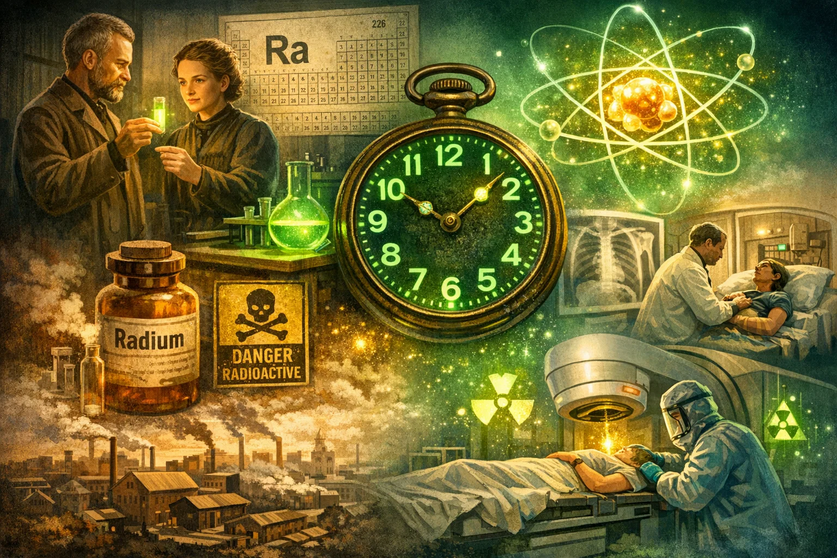
The story of rádiem is one of discovery, brilliance, and caution. Once celebrated as a miracle element, it shaped the course of modern science and medicine, while also teaching humanity valuable lessons about safety and responsibility. From glowing watch dials to cancer treatments, its journey reflects both innovation and risk. This article explores its origins, properties, applications, and evolving role in today’s world, offering a clear and engaging look at a substance that changed history.
What is rádiem in modern science?
In scientific terms, rádiem refers to the radioactive element radium, often discussed in specific grammatical or linguistic contexts. It is a naturally occurring metal known for emitting radiation and glowing faintly in the dark. Discovered in the late 19th century, it became one of the first elements used to study radioactivity in depth.
This element belongs to the alkaline earth metals group and is highly unstable. Its ability to release energy made it valuable for research and early medical treatments, though its dangers were not fully understood at first.
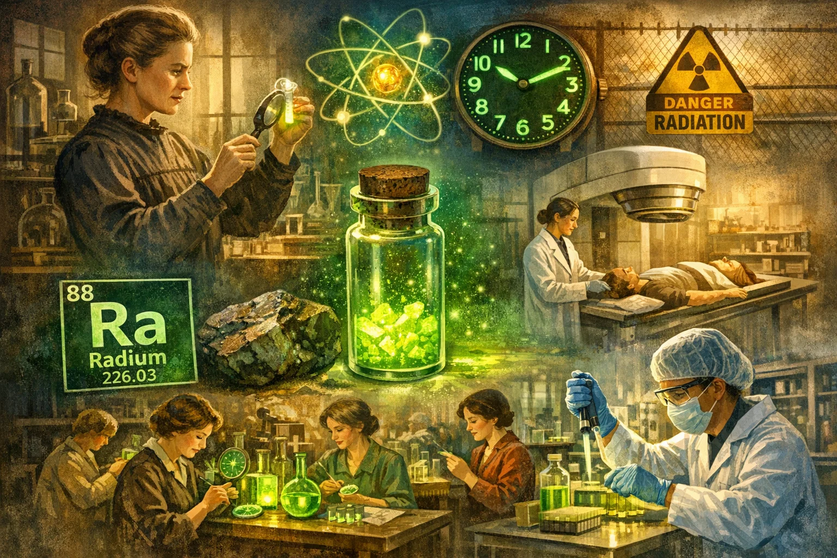
The history of radium discovery
The discovery of radium marked a turning point in science. In 1898, Marie Curie and Pierre Curie isolated the element while studying uranium ores. Their work introduced the concept of radioactivity to the scientific world, earning Marie Curie a Nobel Prize.
Radium quickly gained attention for its unusual properties, especially its ability to glow and emit heat. It became a symbol of scientific progress and was widely studied across Europe and beyond.
Radioactive properties of radium explained
Radium is highly radioactive, meaning it continuously releases energy in the form of particles and rays. This process, known as radioactive decay, transforms it into other elements over time.
Key characteristics include:
- Constant emission of alpha, beta, and gamma radiation
- Ability to ionize surrounding materials
- Production of heat without combustion
These properties made radium valuable for early experiments but also extremely hazardous when mishandled.
Medical uses of radium in early treatments
In the early 20th century, radium was widely used in medicine, particularly for treating cancer. Doctors believed its radiation could destroy harmful cells, and in many cases, it proved effective.
Applications included:
- Radiation therapy for tumors
- Use in sealed tubes or needles placed near cancerous tissues
- Early forms of brachytherapy
Although modern medicine has largely replaced radium with safer alternatives, its role in developing radiation therapy remains significant.
Industrial applications involving radium
Beyond medicine, radium found its way into various industries. One of the most famous uses was in luminous paint, which made watch dials and instrument panels glow in the dark.
Common industrial uses included:
- Glow-in-the-dark paints for clocks and military instruments
- Scientific research tools
- Early radiographic imaging
However, these uses often exposed workers to dangerous levels of radiation, leading to serious health consequences.
Health risks associated with radium exposure
Over time, the harmful effects of radium became clear. Prolonged exposure can lead to severe health issues due to its radioactive nature.
Major risks include:
- Bone cancer and anemia
- Radiation sickness
- Damage to internal organs
One of the most well-known cases involved factory workers known as the “Radium Girls,” who suffered poisoning after handling luminous paint without protection.
Radium in environmental contexts
Radium naturally occurs in soil, water, and rocks, though usually in small amounts. Environmental exposure is typically low, but certain areas with high natural deposits can pose risks.
It can enter drinking water through underground sources, making monitoring essential. Governments regulate acceptable levels to ensure public safety and prevent long-term health effects.
Scientific importance of radium research
Radium played a crucial role in advancing nuclear physics and chemistry. Its discovery helped scientists understand atomic structure and radioactive decay.
Important contributions include:
- Development of nuclear theory
- Advances in atomic research
- Foundations for modern radiation science
Even today, its study helps scientists explore energy, medicine, and environmental safety.
Radium vs other radioactive elements
Compared to other radioactive elements like uranium or plutonium, radium has unique characteristics. It emits strong radiation but has a relatively shorter half-life than some heavy elements.
While uranium is commonly used for nuclear energy, radium is rarely used today due to its risks. Its historical significance, however, remains unmatched in the early study of radioactivity.
Safety regulations for handling radium
Modern regulations strictly control the handling and storage of radioactive materials like radium. Safety standards are enforced globally to protect workers and the public.
Key safety practices include:
- Use of protective shielding
- Limited exposure time
- Secure storage in controlled environments
These measures ensure that the mistakes of the past are not repeated.
Modern alternatives to radium in technology
Today, safer materials have replaced radium in most applications. Advances in science have led to the development of less hazardous radioactive isotopes and non-radioactive alternatives.
Examples include:
- Tritium for luminous devices
- Safer isotopes in cancer treatment
- LED and electronic technologies replacing glow paints
These innovations maintain functionality while reducing health risks.
Cultural and historical impact of radium
Radium influenced not only science but also culture. In the early 1900s, it was marketed as a miracle substance and appeared in consumer products like cosmetics and health tonics.
This widespread use reflected both fascination and misunderstanding. Over time, public perception shifted as its dangers became known, transforming it from a symbol of progress to a cautionary tale.
Economic value of radium over time
At one point, radium was one of the most expensive materials in the world. Its rarity and complex extraction process made it highly valuable.
During its peak:
- It was more expensive than gold
- Used in luxury and scientific markets
- Highly sought after for research
Today, its economic importance has declined, but its historical value remains significant.
Environmental and ethical considerations
The story of radium raises important ethical questions about scientific responsibility. Early enthusiasm often overshadowed safety concerns, leading to harmful consequences.
Modern science emphasizes:
- Ethical research practices
- Environmental protection
- Transparency in risk communication
These principles guide current approaches to handling radioactive materials.
Conclusion
The journey of rádiem reflects the dual nature of scientific discovery—offering both progress and caution. From groundbreaking research to serious health risks, its history is a reminder of the importance of understanding and respecting powerful natural forces. While its practical uses have diminished, its impact on science, medicine, and safety standards continues to shape the modern world. By learning from its past, we ensure a safer and more informed future.
FAQs
1. What does rádiem refer to?
It typically refers to radium in specific linguistic or contextual forms, especially in certain European languages.
2. Who discovered radium?
Radium was discovered by Marie Curie and Pierre Curie in 1898 during their research on radioactive elements.
3. Is radium still used today?
Its use is very limited now, as safer alternatives have replaced it in medicine and industry.
4. Why is radium dangerous?
It emits strong radiation that can damage tissues and lead to serious health conditions like cancer.
5. What replaced radium in luminous paints?
Materials like tritium and modern electronic lighting have replaced radium in most applications.
6. Can radium be found in nature?
Yes, it naturally occurs in small amounts in soil, rocks, and groundwater.
7. What is radium’s biggest contribution to science?
It helped establish the field of radioactivity, leading to major advances in physics and medicine.
Get more updates or Stories on The AI Pedia
